
Non-resident Indians (NRIs) haven't gone big on the Indian stock market story despite the post-pandemic boom. While domestic participation through mutual funds (MFs) and dematerialised accounts has soared, NRI participation figures show limited signs of a similar rise.

'The first time India has seen two consecutive blockbuster IPO years.'
Take calculated, not blind risks, suggests Ramalingam K.

Shares of tyre manufacturers have outperformed broader equity benchmarks, buoyed by multiple tailwinds. Softer raw material prices, an uptick in demand from automakers following the reduction of the goods and services tax (GST) rates, and steady replacement demand have lifted sentiment toward the sector.

Equity markets fell on Monday, with benchmark indices recording their worst session in over two months amid caution ahead of the US Federal Reserve's (Fed's) policy announcement and renewed uncertainty over the US-India trade deal. Sustained selling by foreign portfolio investors (FPIs) also weighed on sentiment.

In the Indian stock market, investors are interested in the actions of both domestic and foreign institutional investors (FIIs and DIIs). These groups have wealth as well as expertise in research, which makes them powerful participants in the Indian stock market. Their buy and sell positions have a large effect on stock prices and market sentiment due to the large volume.

Households should moderate large discretionary expenses for the time being.
'They should prioritise essential spending. They should maintain an emergency fund covering 6 to 12 months of expenses.'

A disruption in the supply of LPG cylinders caused by tensions in the Strait of Hormuz is impacting Indian kitchens, leading to restaurant closures, price hikes and a surge in demand for electric cooktops.

Domestic equities surged on Tuesday, posting their best single-day gains in more than eight months after a long-awaited trade deal between India and the US. The deal, which lowered tariffs on Indian goods to 18 per cent from 50 per cent, significantly improved investor sentiment and lifted a key overhang for the market.

The recent evolution in the passive space has given rise to a new category of funds promising to deliver "active" returns through a structured passive approach. These are often referred to as smart beta or factor-based index funds, and they represent a compelling middle ground for investors.

The Nifty IT index hit a more than nine-month low, trading at its weakest level since April 17, 2025.

Benchmark indices Sensex and Nifty ended marginally higher on Wednesday as a sharp decline in IT blue-chip stocks restricted the rally in the markets.

'Of the 20 trading days of January till January 28, FIIs have been selling for 19 trading days'. 'When did FIIs withdraw money with this kind of intensity?' 'It never happened. It's the first. It did not happen even during the 2008-2009 financial crisis when Lehman went under.' 'Even then you did not have like a 19-day selling spree from the FIIs.'

At the heart of this debate is Section 3(d) of the Patents Act, a safeguard designed to prevent drugmakers from extending monopoly protection through trivial modifications to existing medicines.

Ajit Mishra will answer Your Questions on the stock markets on a weekly basis. Please mail your questions to getahead@rediff.co.in with the subject line 'Stock Market Query' along with your name and Ajit will offer his unbiased views.

New investors or those with lower-than-planned exposure should add US-oriented funds through SIPs.

'Indian markets may initially react and follow the pattern of US and other global markets post US elections.'
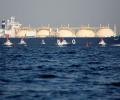
Analysts predict India will face oil price volatility and macroeconomic effects due to the escalating Iran crisis, though the country's oil supply chain is not yet structurally insecure.
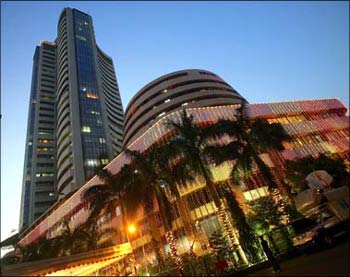
It will be difficult for the Indian equity to outperform overall growth to the extent bullish observers expect.
There has been no reboot of the private investment cycle.

From the Sensex firms, HCL Tech, Tata Steel, Tech Mahindra, Reliance Industries, Bharat Electronics and ICICI Bank were among the laggards. Bajaj Finance, Hindustan Unilever, UltraTech Cement and Power Grid were among the gainers.

The BSE Smallcap index hit an over eight-month low of 47,627.96, falling 3 per cent in Tuesday's intraday trade amid selling pressure due to ongoing tariff-related concerns and rising geopolitical tensions.

'It would be similar to what happened during COVID-19.' 'They are not just losing income, but being pushed into distress.'

Market sentiment is likely to remain cautious as investors position themselves for the upcoming Union Budget and the US Fed's interest rate decision, where expectations are muted.
From the 30-Sensex firms, HDFC Bank, Infosys, HCL Tech, Bajaj Finance, Tata Consultancy Services and Reliance Industries were among the biggest laggards. In contrast, Bharat Electronics, Hindustan Unilever, Tata Steel and UltraTech Cement were among the gainers.
State Bank of India, NTPC, ITC, Asian Paints, Bajaj Finance and Bajaj Finserv were also among the major laggards. In contrast, Power Grid, UltraTech Cement, HCL Technologies and Axis Bank were among the gainers.

From the Sensex firms, Infosys climbed 3.86 per cent. HCL Tech, Tata Consultancy Services, Axis Bank, Kotak Mahindra Bank, Titan and Tech Mahindra were also among the gainers. However, Eternal, UltraTech Cement, Bharti Airtel and Adani Ports were among the laggards.

'The bull market cycle ran for five years. It's the end of that cycle.' 'The next cycle is a down cycle, and in that down cycle, you will see the Sensex falling from their highs of around 68,000 to maybe 40,000-50,000 at the bottom of the cycle.'

India possesses approximately 100 million barrels of commercial crude oil stocks, capable of covering 40-45 days of its requirements if flows through the Strait of Hormuz are disrupted, according to Kpler.

India's $280-billion IT industry heads into 2026, balancing visa-related headwinds and global trade uncertainty against its biggest-ever push into artificial intelligence and the rapid expansion of global capability centres (GCCs). Heightened scrutiny of the US H-1B visa programme - including a proposed $100,000 fee for new visas and concerns over a potential 25 per cent outsourcing tax - has complicated cross-border delivery for Indian firms, even as companies accelerate efforts to reduce reliance on onsite staffing.

'The next two to three weeks will not be decided in Washington.' 'They will be decided in Tehran, in whatever calculation Iran makes about the costs of continued resistance against the costs of appearing to have yielded.'

The Securities and Exchange Board of India (Sebi) has granted a no-objection certificate (NOC) to the National Stock Exchange of India (NSE), paving the way for the country's biggest exchange - currently valued at 5 trillion in the unlisted market - to file draft documents for its long-awaited initial public offering (IPO).

The story of the Bombay Stock Exchange and the people who shaped its growth: From wars and bomb blasts to speculators, reformers and wealth creators.

'I expect IT stocks to trade lower for some time. They are unlikely to make money for investors.'

Flexicap fund performance depends heavily on the fund manager's decisions.

IT stocks dropped in morning trade on Monday, with Tech Mahindra tumbling over 6 per cent, amid concerns over the steep hike in US H-1B visa fees. Shares of Tech Mahindra tumbled 6.45 per cent, LTI Mindtree slumped 5.61 per cent, Persistent Systems dropped 5.51 per cent, Hexaware Technologies tanked 5.14 per cent and HCL Tech fell by 4.24 per cent on the BSE.

The stocks are largely from sectors such as chemicals, finance and cement, which struggled earlier but the worse seems to be behind them.

From the 30 Sensex firms, Tata Consultancy Services and HCL Technologies dropped over 3 per cent each. Infosys, Tech Mahindra, Sun Pharma and Tata Motors were the other major laggards. Bajaj Finance, Bajaj Finserv, Nestle, HDFC Bank, ICICI Bank and State Bank of India were among the biggest gainers.

India, the world's fourth largest economy, is set to maintain the 'goldilocks' phase with tailwinds of good growth, low inflation and robust banking performance as well as reform initiatives poised to sustain the economic pace witnessed during 2025.

Equity benchmarks face a key test as investors weigh consumption revival hopes against tariff pressures and weak earnings. Amidst this, HSBC has outlined tailwinds and risks that could cap gains.
